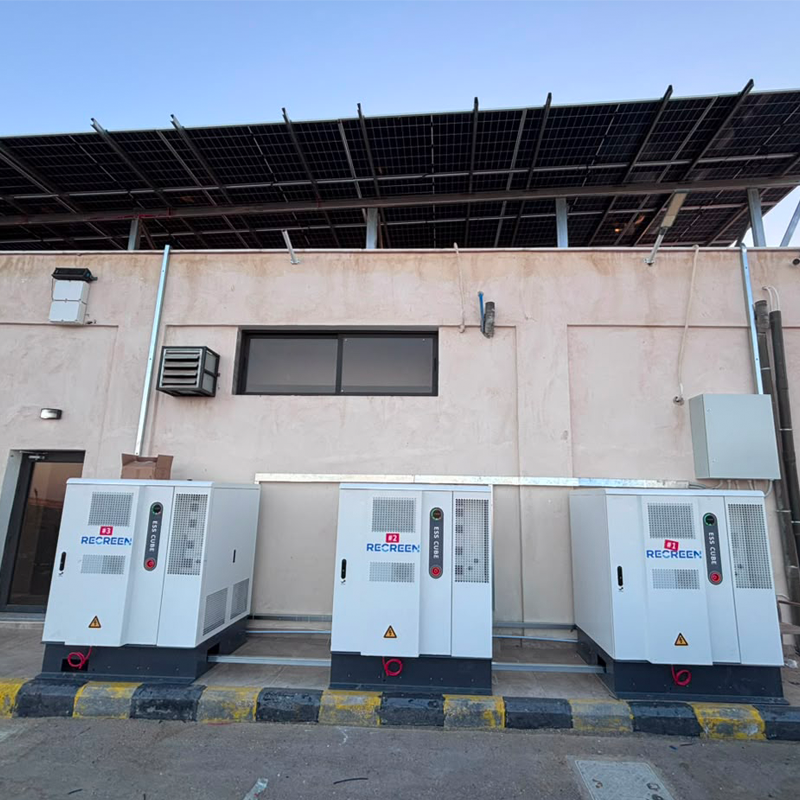
A Practical Guide to Demand Charge Reduction, Battery Sizing and ROI
For many commercial and industrial facilities, electricity costs are not determined only by how much energy they consume.
A short period of high electricity demand can significantly increase the monthly electricity bill.
This is where peak shaving with a Commercial & Industrial Battery Energy Storage System (C&I BESS) can create measurable savings.
By charging the battery when electricity demand is low and discharging it when the facility approaches its peak demand, a BESS can reduce peak power consumption and, where applicable, lower demand-related electricity charges.
But how much can a C&I battery storage system actually save?
The answer depends on several factors.
What Is Peak Shaving?
Peak shaving is an energy management strategy that uses battery energy storage to reduce a facility’s highest power demand.
A typical industrial facility may have a load profile like this:
Low demand → production starts → demand increases → short peak → demand falls
The problem is that the facility may only reach its maximum demand for a short period.
For example, a factory may normally operate around 400 kW, but several large machines start simultaneously and push demand to 650 kW.
Instead of allowing the grid to supply the entire 650 kW, a BESS can discharge during the peak:
Grid: 400 kW
BESS: 250 kW
Factory load: 650 kW
The result is:
The grid sees approximately 400 kW instead of 650 kW.
This is the basic principle behind BESS peak shaving.
Why Does Peak Demand Matter for C&I Customers?
For commercial and industrial electricity users, the electricity bill may include different components depending on the local electricity tariff.
Common charges can include:
- Energy consumption charges ($/kWh)
- Demand charges ($/kW)
- Time-of-use electricity rates
- Fixed charges
- Power factor penalties or related charges
This means that reducing energy consumption is not always enough.
A facility could consume the same amount of electricity but reduce its maximum demand—and potentially reduce its electricity costs.
This is why peak shaving is one of the most important economic applications of C&I battery energy storage.
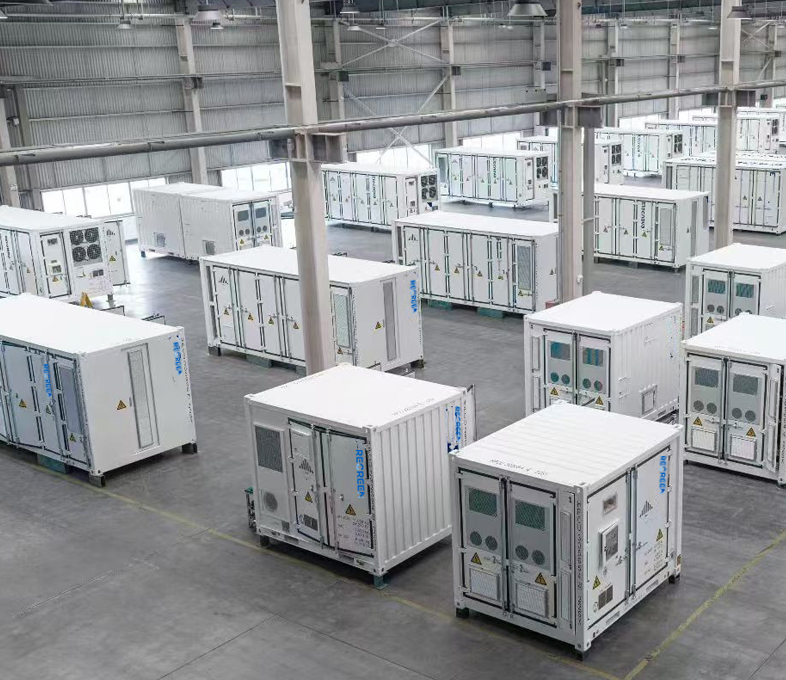
How Does a BESS Reduce Peak Demand?
The basic operating strategy is simple.
Before peak shaving
Grid → 650 kW
       ↓
Factory → 650 kW
With BESS peak shaving
             ┌──→ Grid: 400 kW
Factory 650 kW
             └──→ BESS: 250 kW
The battery supplies part of the instantaneous load.
The grid therefore sees a lower peak.
A properly configured EMS can monitor the facility’s real-time power demand and automatically control the BESS when the load approaches a predefined demand threshold.
How Much Can a C&I BESS Save?
There is no single savings number that applies to every project.
A useful first estimate is:
Peak Shaving Savings ≈ Peak Demand Reduction × Applicable Demand Charge × Billing Period
Where:
- ΔP = reduction in peak demand (kW)
- C demand = applicable demand charge ($/kW)
- N = number of billing periods
However, the actual project economics can be more complicated because tariffs, battery efficiency, operating limits, and demand-charge calculation methods vary by market and utility.
Example: 250 kW Peak Shaving
Let’s consider a simplified example.
A manufacturing facility has:
- Normal demand: 400 kW
- Maximum demand: 650 kW
- Target demand: 400 kW
- Potential peak reduction: 250 kW
- Demand charge: $15/kW/month
In this simplified scenario:
250 kW × $15/kW = $3,750/month
Potential annual demand-charge savings:
$3,750 × 12 = $45,000/year
This is only an illustrative example, not a guaranteed saving.
The actual result should be calculated using the customer’s historical load profile and utility tariff.
Why Battery Power and Battery Capacity Both Matter
This is one of the most important points when sizing a C&I BESS.
Customers often ask:
“How many kWh of battery storage do I need?”
But peak shaving requires you to consider both kW and kWh.
kW determines:
How much peak power the battery can reduce.
kWh determines:
How long the battery can maintain that reduction.
For example:
A 250 kW / 500 kWh BESS could theoretically provide:
250 kW for approximately 2 hours
before considering system losses, operating limits and reserve SOC.
But if the customer’s peak lasts only 30 minutes, a completely different battery configuration may be sufficient.
This is why BESS sizing should be based on the facility’s actual load profile rather than simply choosing a larger battery.
Peak Shaving Is Not the Same as Energy Arbitrage
This is another useful section to add because it improves the article’s GEO value.
Peak Shaving
The objective is:
Reduce maximum grid demand.
The battery discharges when the facility approaches its demand limit.
Energy Arbitrage
The objective is:
Charge when electricity is inexpensive and discharge when electricity is expensive.
These two strategies can operate together.
For example:
Night
Low electricity price → BESS charges
↓
Morning
Factory starts → BESS supports load
↓
Afternoon
High demand → BESS performs peak shaving
↓
Evening
High electricity price → BESS discharges
↓
Night
BESS recharges
This is where an intelligent EMS becomes important.
Can One BESS Provide Multiple Economic Benefits?
Yes.
This is actually where I would make the article more commercially interesting.
A C&I BESS does not necessarily need to perform only one function.
The same system may potentially be used for:
1. Peak Shaving
Reduce maximum demand.
2. Load Shifting
Move electricity consumption from one period to another.
3. Energy Arbitrage
Charge during lower-cost periods and discharge during higher-cost periods.
4. Solar Self-Consumption
Store excess PV generation and use it later.
5. Backup Power
Provide power to critical loads during grid outages.
6. EV Charging Support
Reduce the impact of high-power EV charging on the grid connection.
7. Microgrid Operation
Coordinate PV, BESS, grid and generators.
The economic value of a BESS can therefore come from multiple revenue or savings streams rather than peak shaving alone.
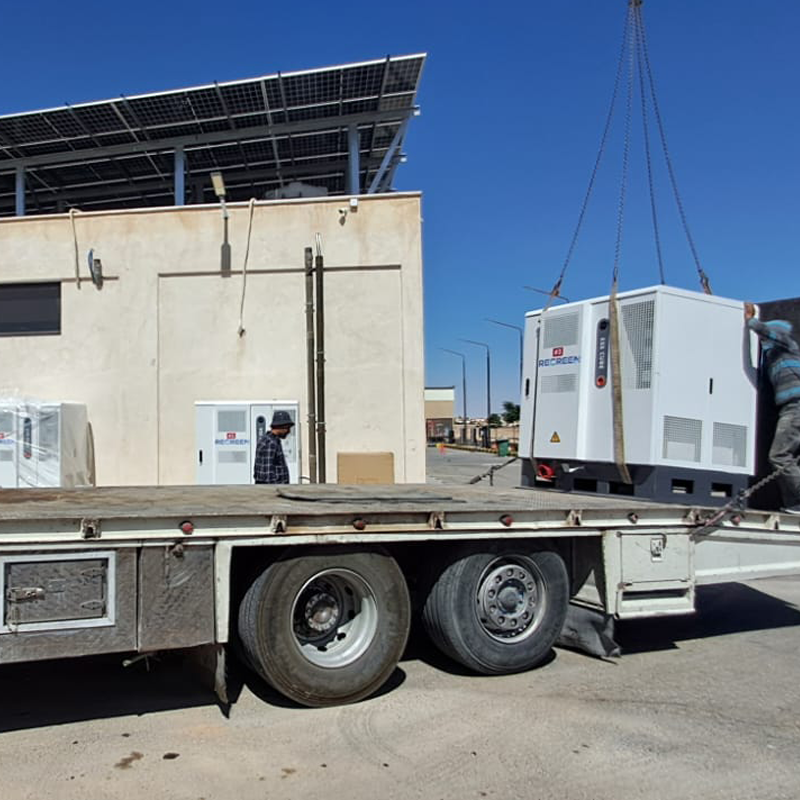
What Determines Peak Shaving Savings?
Before estimating the ROI of a C&I BESS, several parameters should be evaluated.
1. Electricity Tariff
Different markets have different tariff structures.
The most important question is:
Does the customer’s electricity bill include a demand charge?
If there is no meaningful demand-related charge, peak shaving may have limited direct economic value.
2. Load Profile
A 15-minute or 30-minute load profile can reveal:
- Average demand
- Maximum demand
- Peak duration
- Peak frequency
- Daily load pattern
- Seasonal changes
This data is much more useful than simply knowing the facility’s annual electricity consumption.
3. BESS Power Rating
If the facility needs to reduce a 500 kW peak by 300 kW, a 100 kW battery inverter cannot provide the required peak-shaving power.
Therefore:
BESS kW must match the required peak reduction.
4. BESS Energy Capacity
The battery also needs enough stored energy to maintain peak shaving for the required period.
A short 10-minute peak and a continuous 3-hour peak require very different BESS configurations.
5. EMS Control Strategy
Peak shaving is not simply a matter of turning the battery on.
A smart EMS can:
- Monitor real-time load
- Set a grid demand limit
- Predict upcoming demand
- Control battery charging/discharging
- Coordinate with PV
- Coordinate with EV chargers
- Maintain minimum SOC
- Prioritize backup power reserves
This is why EMS intelligence can have a direct impact on BESS project economics.
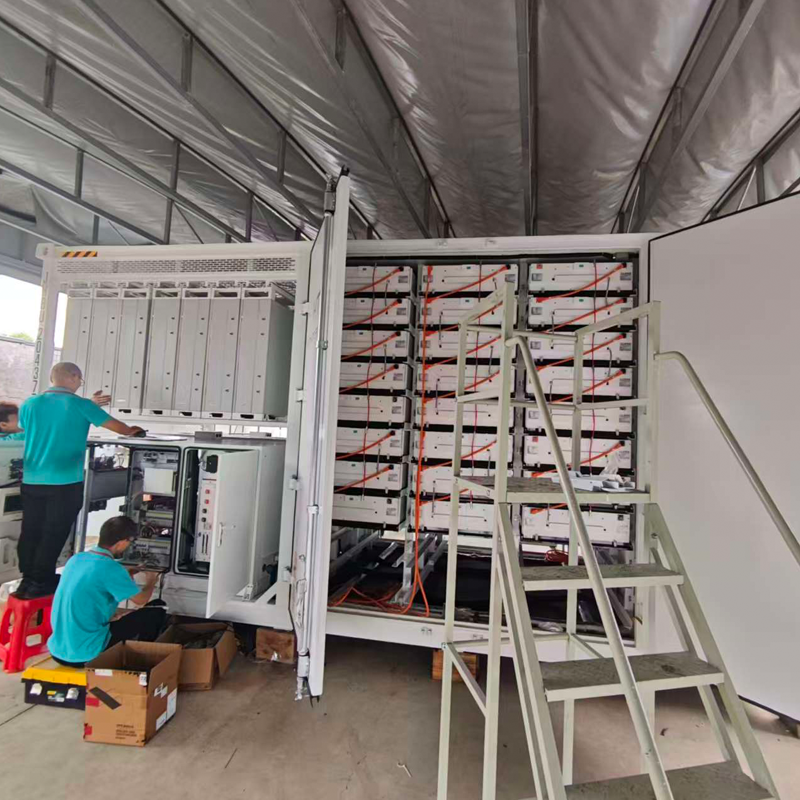
How to Know If Peak Shaving Is Right for Your Business
A C&I BESS is particularly worth evaluating when a facility has:
✔ High demand charges
✔ Short but frequent power peaks
✔ Large motors or production equipment
✔ High-power EV charging
✔ Solar PV with excess daytime generation
✔ Significant differences between peak and off-peak electricity prices
✔ Limited grid capacity
✔ A need for backup power
Typical applications include:
- Manufacturing facilities
- Warehouses
- Data centers
- Shopping centers
- Hotels
- Hospitals
- Cold storage
- Logistics centers
- EV charging hubs
- Commercial buildings
Peak Shaving vs Grid Expansion
There is another angle I strongly recommend adding.
For some businesses, the question is not simply:
“Should I install a battery?”
It is:
“Should I install a BESS or upgrade my grid connection?”
Suppose an industrial facility wants to add new production equipment but its existing grid connection cannot handle the additional peak load.
A traditional solution may involve:
Grid capacity upgrade → infrastructure investment → higher connection capacity
An alternative may be:
Existing grid connection + BESS → battery supports short-duration peaks
The right solution depends on the utility, connection constraints, load profile and project economics.
This gives you a very good future article:
BESS vs Grid Expansion: Which Is More Cost-Effective for C&I Customers?
Can Peak Shaving Alone Pay for a BESS?
Sometimes—but not always.
This is an important point that makes the article more credible.
A project should not be evaluated only on:
Demand charge savings
Instead, the total business case may include:
Peak shaving
Energy arbitrage
Solar self-consumption
Backup power
EV charging support
Grid capacity optimization
The more applications a BESS can provide, the greater its potential utilization.
Why C&I BESS Sizing Should Start with Your Load Data
Instead of asking:
“Should I buy 500 kWh or 1 MWh?”
Start with:
Step 1
Collect 12 months of electricity bills.
Step 2
Obtain the facility’s interval load data.
Step 3
Identify the highest demand periods.
Step 4
Determine the target grid demand.
Step 5
Calculate the required BESS power.
Step 6
Calculate the required battery capacity.
Step 7
Simulate the EMS operating strategy.
Step 8
Compare investment cost with annual savings.
This provides a much more reliable basis for determining BESS ROI and payback period.
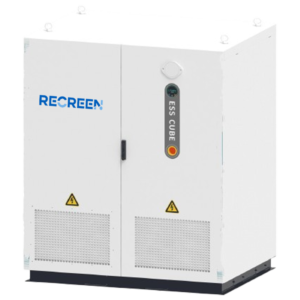
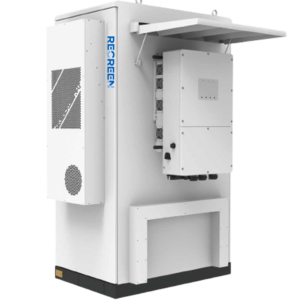
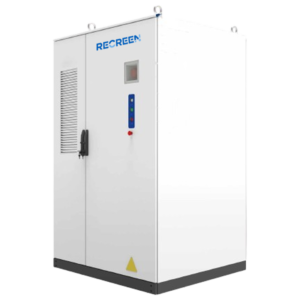
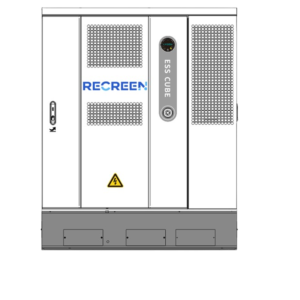
How Recreen Energy Supports C&I Peak Shaving
For C&I projects, Recreen Energy provides battery energy storage solutions designed for applications including:
- Peak shaving
- Demand charge management
- Backup power
- Solar + storage
- Microgrids
- EV charging
- Energy management
Our C&I BESS portfolio can be configured according to different power, energy capacity, cooling and application requirements.
For example, our 125 kW / 261 kWh liquid-cooled energy storage system can be considered for commercial and industrial applications where high power output, thermal management and compact system integration are important.
For larger applications, modular BESS configurations can be scaled according to the project’s load profile and energy requirements.
How Much Could Your Facility Save?
There is no universal answer.
The most accurate way to estimate savings is to analyze:
Load profile + electricity tariff + peak demand + BESS size + EMS strategy
If you provide these parameters, a BESS supplier can evaluate the potential peak-shaving savings and help determine the appropriate system size.
Looking to reduce demand charges with C&I battery storage?
Contact Recreen Energy for a customized BESS solution and project assessment.
👉 Request a Quote
Q: What is BESS peak shaving?
A: BESS peak shaving uses a battery energy storage system to discharge during periods of high facility demand, reducing the amount of power drawn from the grid and potentially lowering demand-related electricity charges.
Q: How much can a C&I BESS save?
A: Savings depend on the customer’s tariff, demand charges, load profile, BESS power and energy capacity, and EMS strategy. A project-specific analysis is required to estimate actual savings.
Q: How do I size a battery for peak shaving?
A: BESS sizing should consider both power (kW) and energy capacity (kWh), as well as the magnitude and duration of the facility’s peak demand.
Q: Can BESS replace a diesel generator?
A: BESS can replace diesel generators for some backup applications, particularly where short-duration backup, low noise and zero local emissions are priorities. For long-duration or extended outages, a BESS and diesel generator hybrid system may be more suitable.