How Solar PV, Battery Storage and Diesel Generators Work Together to Deliver Reliable Power for Commercial, Industrial and Off-Grid Applications
Reliable electricity is something most of us take for granted.
We switch on the lights, start our computers and operate electrical equipment without thinking about where the electricity comes from.
But for businesses operating in remote locations, industrial facilities with unstable grids, construction sites or isolated communities, reliable electricity can be a daily challenge.
Solar power provides clean electricity, but its output depends on sunlight. Battery storage can supply electricity when solar generation is unavailable, but batteries have limited energy capacity. Diesel generators provide dispatchable power, yet fuel consumption, maintenance costs, noise and emissions remain significant concerns.
What if these three power sources could work together instead of operating independently?
This is exactly what a solar-battery-diesel hybrid energy storage system is designed to achieve.
By combining solar PV, battery energy storage and diesel generation through intelligent energy management, a hybrid system can improve power supply flexibility, reduce unnecessary generator operation and support both grid-connected and off-grid applications.
In this article, we explain how solar-battery-diesel hybrid systems work, their main components, operating strategies, benefits and applications for commercial and industrial facilities.
1. What Is a Solar-Battery-Diesel Hybrid Energy Storage System?
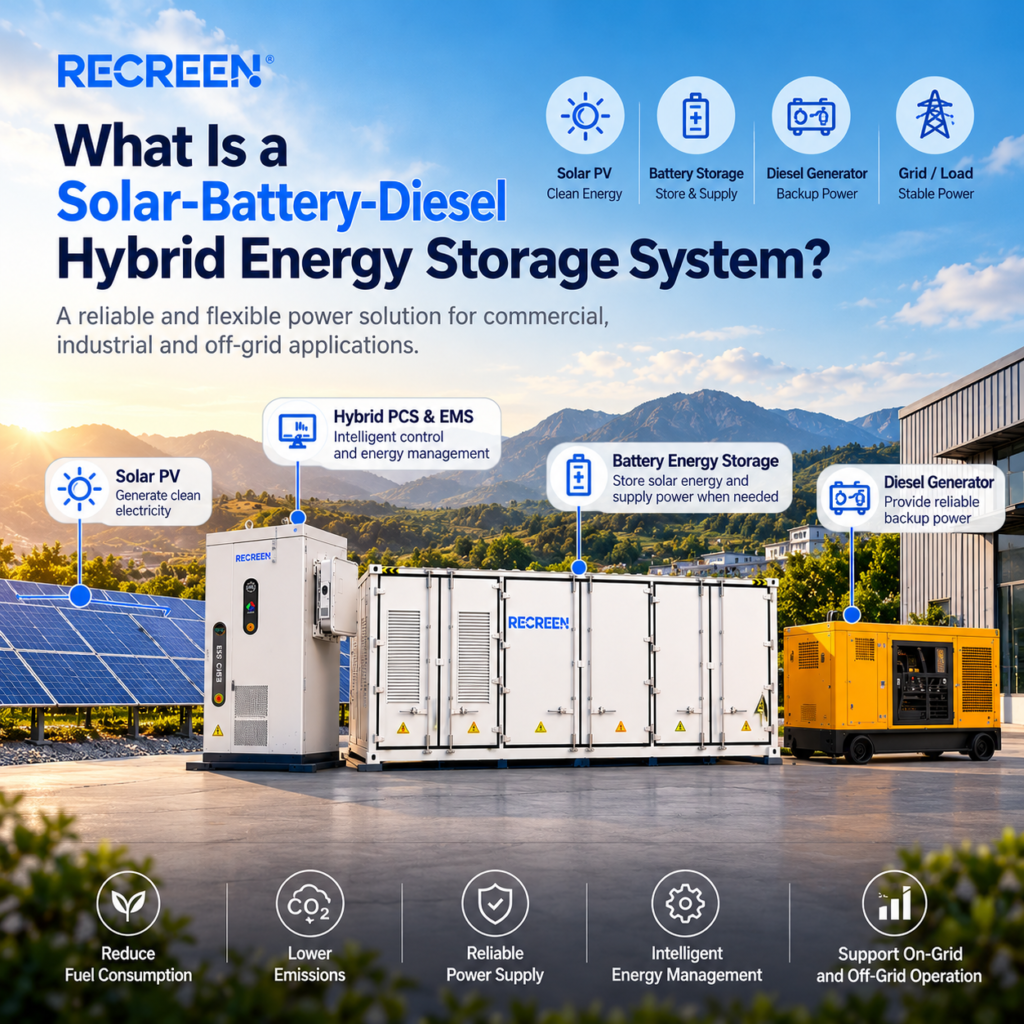
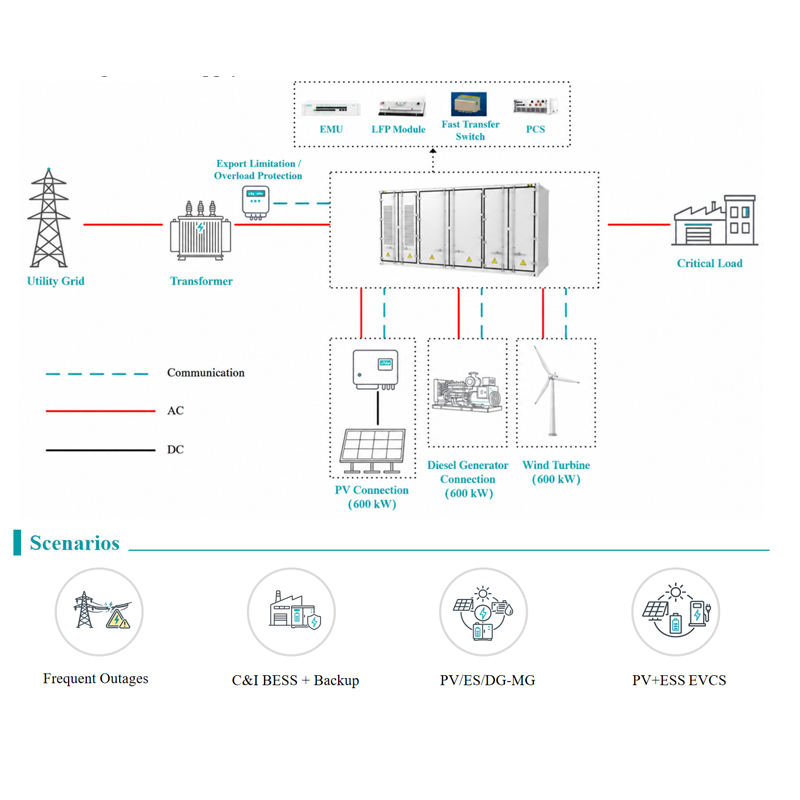
A solar-battery-diesel hybrid energy storage system is an integrated power solution that combines solar photovoltaic (PV) generation, a battery energy storage system (BESS) and a diesel generator to supply electricity to connected loads.
The system uses an energy management system (EMS) and compatible power conversion equipment to coordinate electricity generation, battery charging and discharging, and backup power operation.
The three energy sources have different roles:
Solar PV: Generates renewable electricity during daylight hours.
Battery Storage: Stores electricity and supplies power when solar generation is insufficient or when backup energy is required.
Diesel Generator: Provides additional or backup electricity when solar generation and available battery energy cannot meet demand.
Where a utility connection is available, the system can also integrate grid electricity.
The basic operating principle is straightforward:
Solar power first, battery storage when needed, and diesel generation as backup — according to the configured energy management strategy.
Instead of relying on one energy source, the system coordinates multiple power sources to meet changing electricity requirements.
For commercial and industrial facilities, this approach can provide a more flexible alternative to traditional diesel-only power systems.
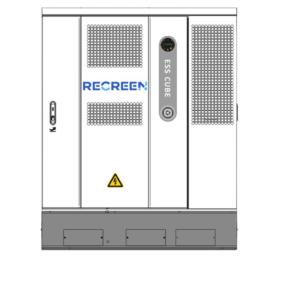
What Is an Integrated Solar-Storage-Diesel ESS Cabinet?
An integrated solar-storage-diesel ESS cabinet combines battery storage, power conversion, control and protection equipment into a compact system architecture.
Depending on the product design, the cabinet may incorporate:
Lithium battery modules
Battery Management System (BMS)
Hybrid Power Conversion System (PCS)
Solar MPPT interfaces
Energy Management System (EMS)
Generator connection and control interfaces
Grid-connected and off-grid switching functions
Cooling and electrical protection systems
The diesel generator and solar panels are generally external equipment connected to the hybrid ESS rather than physically installed inside the battery cabinet.
This integrated architecture can simplify equipment arrangement and reduce the number of separately installed components.
2. What Are the Main Components of a Solar-Battery-Diesel Hybrid System?
A reliable hybrid power system depends on several components working together.
Solar PV: The Primary Renewable Energy Source
Solar photovoltaic panels convert sunlight into DC electricity.
Through suitable MPPT controllers and power conversion equipment, solar electricity can be used to supply connected loads and charge the battery.
MPPT stands for Maximum Power Point Tracking.
Its purpose is to continuously adjust the operating point of the connected solar array to improve energy harvesting under changing sunlight and temperature conditions.
Solar PV provides electricity without fuel combustion during operation, making it an important part of reducing diesel dependence.
However, solar generation varies throughout the day and cannot provide consistent output without complementary energy sources or storage.
Battery Energy Storage: The Energy Reserve and Fast-Response Power Source
The battery energy storage system acts as the energy reserve of the hybrid power system.
When solar generation exceeds immediate demand, available energy can be stored in the battery.
When solar output decreases or electricity demand increases, the battery can discharge to support connected loads.
A typical battery storage system includes lithium battery modules, a BMS, thermal management equipment and electrical protection devices.
Beyond storing energy, a properly configured BESS can also provide fast active-power response.
When paired with suitable PCS controls, it can help support voltage and frequency regulation in grid-connected or islanded applications.
This capability is particularly valuable in systems where solar generation and electricity demand change frequently.
Diesel Generator: Dispatchable Backup Power
Diesel generators remain important in remote and weak-grid power systems.
Unlike solar PV, a diesel generator can produce electricity independently of sunlight, provided sufficient fuel and suitable operating conditions are available.
In a hybrid system, the generator can be scheduled to operate when:
Solar generation is insufficient
Battery state of charge reaches a defined threshold
Electrical demand exceeds the available power from solar and battery storage
Extended backup power is required
Depending on the system design, the generator may also charge the battery while supplying loads.
Instead of running continuously, the generator can operate according to an optimized schedule.
This creates opportunities to reduce fuel consumption and maintenance requirements.
EMS: The Intelligent Control Center
The Energy Management System coordinates the operation of the different energy sources.
It monitors parameters such as:
Solar PV generation
Battery state of charge (SOC)
Battery charging and discharging power
Electrical load demand
Grid availability
Generator operating status
System alarms and protection conditions
Based on predefined operating priorities, the EMS determines how the available energy sources should be used.
For example, it may prioritize solar generation, maintain a minimum battery reserve for backup power and start the diesel generator when additional energy is required.
The actual functions depend on the selected EMS, PCS, generator controls and project configuration.
3. How Does a Solar-Battery-Diesel Hybrid System Work?
The most important advantage of a hybrid energy storage system is its ability to coordinate different power sources according to changing operating conditions.
Let’s look at five common scenarios.
Scenario 1: Sunny Day — Solar Power Takes Priority
During daylight hours, the solar PV system generates electricity.
The hybrid system can prioritize solar power to supply connected loads.
If solar generation exceeds immediate electricity demand and battery charging is permitted, the surplus energy can be stored in the battery.
When sufficient solar energy is available, the diesel generator may remain off.
This reduces unnecessary generator operating hours.
Scenario 2: Cloudy Weather or Evening — Battery Storage Supports the Load
When sunlight decreases, solar PV output may no longer meet the facility’s electricity demand.
The battery energy storage system can discharge to cover part or all of the shortfall, within its available power and energy limits.
This allows the facility to continue using stored electricity rather than immediately starting the diesel generator.
The duration of battery operation depends on usable battery capacity, load demand and operating conditions.
Scenario 3: Low Battery SOC — Diesel Generator Provides Backup
During prolonged cloudy weather or extended periods of high electricity demand, the battery may reach its minimum permitted state of charge.
If the system is configured for automatic generator control, the EMS can issue a generator start command when the relevant conditions are met.
Once the generator has started and stabilized, the system can coordinate generator power with the connected loads and battery charging strategy.
The generator can then stop when the configured operating conditions permit.
This approach helps avoid unnecessary generator operation while maintaining access to dispatchable backup power.
Scenario 4: Utility Grid Failure — Hybrid BESS Supports Off-Grid Operation
For facilities connected to an unreliable utility grid, power interruptions can affect normal operations.
A hybrid energy storage system with suitable islanding protection, grid-forming capability and transfer equipment can transition from grid-connected to off-grid operation.
During off-grid operation, the battery and other compatible power sources can supply designated loads.
Fast switching is particularly important for commercial applications where interruption duration matters.
For example, Recreen Energy’s integrated hybrid ESS product series specifies an off-grid switching time of less than 10ms under applicable operating conditions.
However, switching speed alone does not guarantee uninterrupted operation for every type of electrical equipment.
Scenario 5: Grid Power Returns — The System Resumes Grid-Connected Operation
When the utility grid becomes available again, the system can reconnect after the required electrical checks and synchronization procedures.
The EMS then resumes the configured grid-connected operating strategy.
Depending on project requirements, the system may use grid electricity to charge the battery during scheduled periods or maintain a backup energy reserve.
4. What Are the Benefits of a Solar-Battery-Diesel Hybrid Energy Storage System?
1. Lower Diesel Fuel Consumption
Traditional diesel-only power systems depend heavily on fuel.
By introducing solar PV and battery storage, businesses can reduce generator operating hours when sufficient renewable energy and stored electricity are available.
Lower generator runtime can reduce fuel consumption, maintenance requirements and associated emissions.
The actual savings depend on system sizing, local solar conditions, generator efficiency and the facility’s electricity consumption.
2. Improved Power Supply Flexibility
Solar PV, batteries and diesel generators complement one another.
Solar provides renewable generation, batteries provide stored energy and fast response, and diesel generators provide dispatchable backup power.
This combination gives businesses more options for responding to changing electricity conditions.
3. Better Solar Energy Utilization
Without battery storage, surplus solar electricity may be curtailed or exported, depending on the electrical system.
Battery storage can absorb available surplus generation and release that energy later.
This improves the flexibility of solar power utilization.
4. Reduced Generator Noise and Emissions
Diesel generators produce noise and exhaust emissions while operating.
When solar PV and battery storage reduce generator runtime, they can also reduce the duration of associated noise and emissions.
This can be beneficial for commercial buildings, agricultural facilities and other noise-sensitive environments.
5. Intelligent Energy Management
A hybrid system can coordinate different power sources automatically according to its programmed control strategy.
This reduces the need for constant manual switching and enables more consistent energy management.
6. Modular System Expansion
Some integrated hybrid ESS solutions support parallel operation and capacity expansion.
This gives project developers flexibility when planning systems for growing electricity demand.
5. Solar-Battery-Diesel Hybrid System vs Traditional Diesel Generator
| Feature | Diesel Generator Only | Solar-Battery-Diesel Hybrid System |
|---|---|---|
| Energy Sources | Diesel fuel | Solar PV, battery and diesel |
| Solar Utilization | Not integrated by default | Integrated |
| Energy Storage | Not included | Battery storage |
| Generator Runtime | Depends on demand | Can be reduced |
| Fuel Consumption | Generator-dependent | Can be optimized |
| Grid Outage Response | Requires generator startup and transfer | Battery can provide fast backup if configured |
| Noise | Generator operates when supplying power | Reduced during battery/solar operation |
| Initial Investment | Generally lower | Generally higher |
| Operating Costs | Fuel and maintenance | Fuel, maintenance and storage lifecycle costs |
| Energy Management | Generator controls | Coordinated multi-source control |
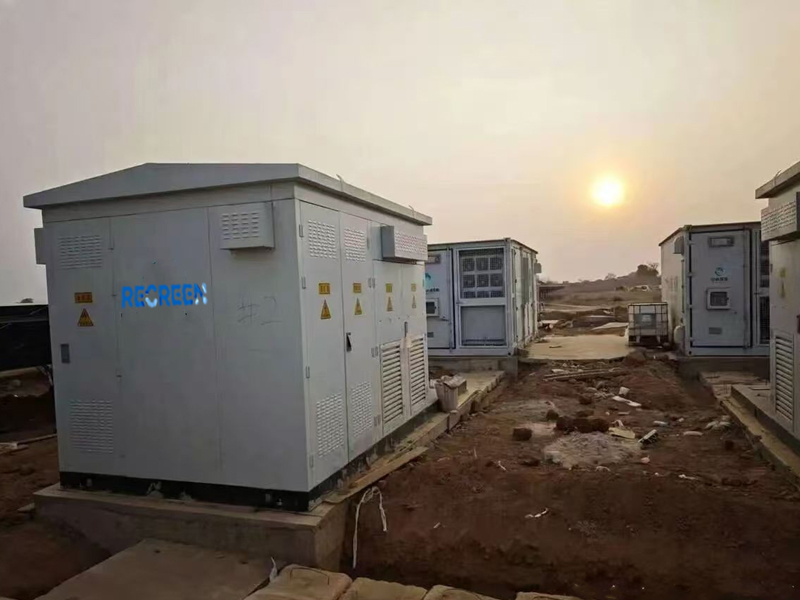
A hybrid energy storage system does not necessarily replace the diesel generator.
Instead, it changes the generator’s role from a continuously operating power source to a dispatchable component within a coordinated energy system.
For many commercial and industrial applications, this is a practical way to introduce renewable energy without eliminating conventional backup power.
6. Why Are Fast Off-Grid Switching and Grid-Forming PCS Important?
Commercial customers often focus on battery capacity and inverter power when evaluating energy storage systems.
However, power conversion and control capabilities are equally important.
Fast On-Grid/Off-Grid Switching
A hybrid BESS may need to transfer between grid-connected and off-grid operation when the utility grid fails.
A fast transfer function helps reduce the duration of the interruption.
Recreen Energy’s integrated hybrid ESS specifies less than 10ms off-grid switching.
This feature is relevant for commercial and industrial facilities requiring rapid backup power response.
Actual load continuity depends on the electrical architecture, connected equipment and operating conditions.
Grid-Forming PCS and VSG Technology
In an islanded microgrid, the electrical system needs a source capable of establishing and maintaining voltage and frequency.
A grid-forming PCS can provide this reference when appropriately designed.
Some PCS configurations also support Virtual Synchronous Generator (VSG) control.
VSG technology enables the converter to emulate selected dynamic characteristics of a synchronous generator, including virtual inertia and damping responses.
This can be useful for weak-grid applications and hybrid microgrids integrating solar PV, batteries and diesel generators.
Recreen Energy can offer optional VSG-enabled PCS configurations for projects requiring advanced grid-forming capabilities.
The availability and performance of these functions depend on the selected PCS and overall system design.
7. Where Are Solar-Battery-Diesel Hybrid Systems Used?
Remote Communities and Island Microgrids
In areas without reliable grid access, hybrid power systems can coordinate solar generation, battery storage and diesel backup to support local electricity demand.
Construction Sites and Temporary Industrial Facilities
Construction projects often rely on diesel generators for temporary power.
Integrating solar and battery storage can reduce generator operating hours and provide additional energy management flexibility.
Telecommunications Infrastructure
Remote telecommunications facilities require dependable electricity.
Hybrid power systems can support site loads using solar energy, batteries and generator backup, subject to the required autonomy and reliability design.
Commercial Buildings and Retail Stores
Retail stores and commercial buildings can use hybrid ESS solutions to coordinate solar PV, battery storage and utility grid electricity.
Fast off-grid switching can also support backup power applications.
Agricultural Facilities
Irrigation systems, agricultural processing facilities and remote farms may benefit from hybrid power systems where grid electricity is unavailable or unreliable.
Industrial Microgrids
Factories and remote industrial facilities can use hybrid energy storage to coordinate multiple power sources and improve power supply resilience.
Emergency and Disaster Recovery
Hybrid power systems may support temporary electricity supply for emergency response operations.
However, deployment speed, mobility and critical-load suitability depend on the specific equipment and installation requirements.
8. Recreen Energy’s Integrated Solar-Storage-Diesel Hybrid ESS
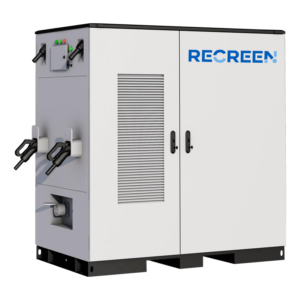
For commercial and industrial projects requiring multi-source energy integration, Recreen Energy offers integrated hybrid battery energy storage solutions.
The product family includes two configurations:
L261-M: 125kW/261kWh Hybrid ESS
L522-M: 125kW/522kWh Hybrid ESS
- Tailor Made PV Solar Battery Energy Storage Systems Diesel Generator solution including 1MWH~4MWH
Both models are designed to integrate solar PV, battery storage, diesel generator connections and utility grid operation.
Key Technical Specifications
| Parameter | L261-M | L522-M |
|---|---|---|
| Battery Capacity | 261.248kWh | 522.496kWh |
| Maximum AC Output Power | 125kW | 125kW |
| Maximale PV-Eingangsleistung | 250kW | 250kW |
| Maximum Generator Power | 125kW | 125kW |
| Off-Grid Switching Time | Less than 10ms | Less than 10ms |
| MPPT Spannungsbereich | 150–950V | 150–950V |
| Battery Cell | 314Ah LFP | 314Ah LFP |
| Cooling System | Intelligent Liquid Cooling | Intelligent Liquid Cooling |
| Protection Rating | IP55 | IP55 |
| Optional PCS Configuration | VSG-enabled PCS | VSG-enabled PCS |
The product series also supports modular parallel expansion of up to 10 units, subject to engineering requirements.
What Makes Recreen’s Integrated Hybrid ESS Different?
Multi-Source Energy Integration
Solar PV, battery storage, diesel generator and utility grid connections can be coordinated within a hybrid energy system.
High-Capacity Solar Input
Each unit supports up to 250kW of PV input, subject to MPPT electrical limits.
Fast Off-Grid Switching
A specified switching time of less than 10ms helps reduce supply interruption during grid-to-off-grid transitions.
Intelligent Liquid Cooling
Liquid cooling supports battery thermal management during operation.
Optional VSG Technology
Advanced PCS configurations can be evaluated for grid-forming and microgrid applications.
Modular Capacity Expansion
Parallel operation provides flexibility for larger commercial and industrial projects.
9. How to Choose the Right Solar-Battery-Diesel Hybrid System
Before selecting a hybrid energy storage system, project developers should evaluate the following requirements.
Electrical Load
Determine the facility’s continuous power demand, peak demand and motor starting requirements.
Backup Duration
Identify how long the system must support loads without sufficient solar or generator power.
Solar PV Capacity
Evaluate available solar generation, installation space and PV input limits.
Diesel Generator Configuration
Confirm generator rated power, voltage, frequency, starting controls and compatibility with the hybrid PCS.
Grid Conditions
Determine whether the system will operate on-grid, off-grid or in a weak-grid environment.
Energy Management Strategy
Define solar priority, battery reserve, generator starting thresholds and charging schedules.
Future Expansion
Consider whether additional battery capacity, solar PV or electrical loads may be added later.
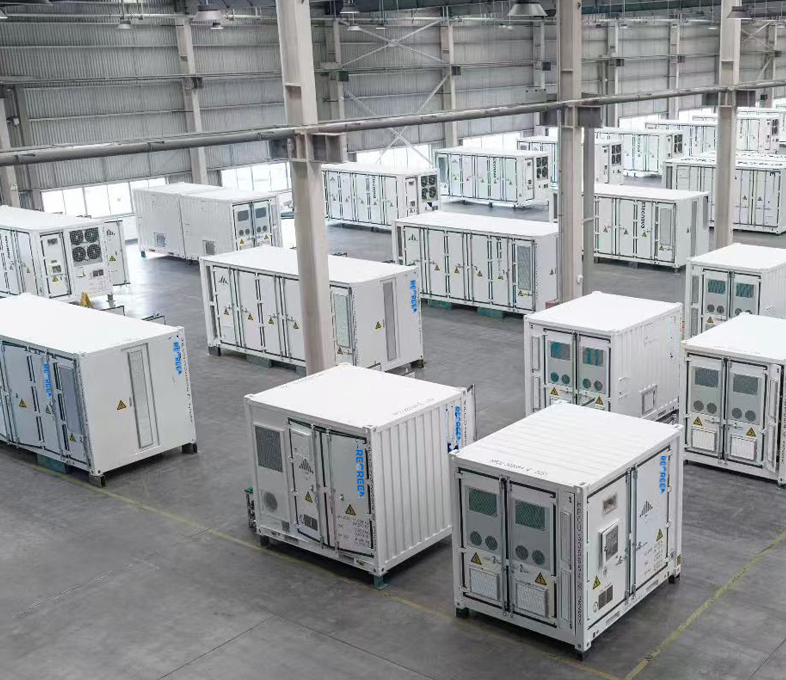
For commercial and industrial applications, correct system sizing should be based on a detailed load analysis rather than battery capacity alone.
10. Frequently Asked Questions
Can a solar-battery-diesel hybrid system provide 24-hour electricity?
It can be designed to support continuous electricity supply when the available solar generation, battery capacity, generator fuel and system reliability meet the required load conditions. Continuous supply is not guaranteed solely by combining these components.
Can solar panels charge the battery while supplying loads?
Yes. A properly configured hybrid system can use available solar generation to supply loads and charge the battery, subject to inverter power limits and the energy management strategy.
Does the diesel generator need to run continuously?
No. In a suitable hybrid configuration, the generator can remain off when solar and battery power are sufficient. Generator operation depends on load demand, battery state of charge and control settings.
Can the system automatically start the diesel generator?
Yes, when automatic generator starting is supported by the selected EMS, generator controller and electrical design.
What happens when the utility grid fails?
A hybrid system with appropriate off-grid capability can transition to islanded operation and supply designated loads using available battery energy and other compatible sources.
What is the difference between a hybrid ESS and a conventional BESS?
A conventional BESS primarily stores and releases electricity. A hybrid ESS additionally integrates and coordinates multiple energy sources, such as solar PV, diesel generators and the utility grid.
What is VSG mode in a hybrid energy storage system?
VSG is a control technology that allows a compatible PCS to emulate selected characteristics of a synchronous generator, supporting grid-forming operation and power-system dynamic response in suitable applications.
Can a solar-battery-diesel hybrid system reduce electricity costs?
Yes, it may reduce operating costs by increasing solar utilization, reducing generator runtime and optimizing electricity use. Actual savings depend on fuel prices, tariffs, load profiles, system efficiency and investment costs.
Conclusion: A Smarter Way to Combine Solar, Battery Storage and Diesel Power
A solar-battery-diesel hybrid energy storage system combines the advantages of three complementary energy sources.
Solar PV provides renewable electricity. Battery storage makes energy available when needed. Diesel generation provides dispatchable backup power.
Through intelligent energy management and suitable power conversion technology, these resources can work together to support commercial and industrial electricity requirements.
For businesses operating in remote locations, weak-grid environments or facilities with high diesel dependence, hybrid energy storage offers a practical pathway toward more flexible and efficient power supply.
The key is not simply combining solar panels, batteries and a generator.
It is designing an energy system in which every power source operates at the right time, for the right purpose.
Looking for a Solar-Battery-Diesel Hybrid Energy Storage Solution?
Recreen Energy provides integrated hybrid ESS solutions for commercial and industrial applications, including solar integration, diesel generator coordination, fast off-grid switching and optional grid-forming PCS configurations.
Whether you are developing a remote microgrid, upgrading an existing diesel-powered facility or planning a commercial solar-plus-storage project, our engineering team can help evaluate your requirements.