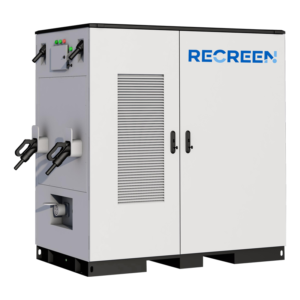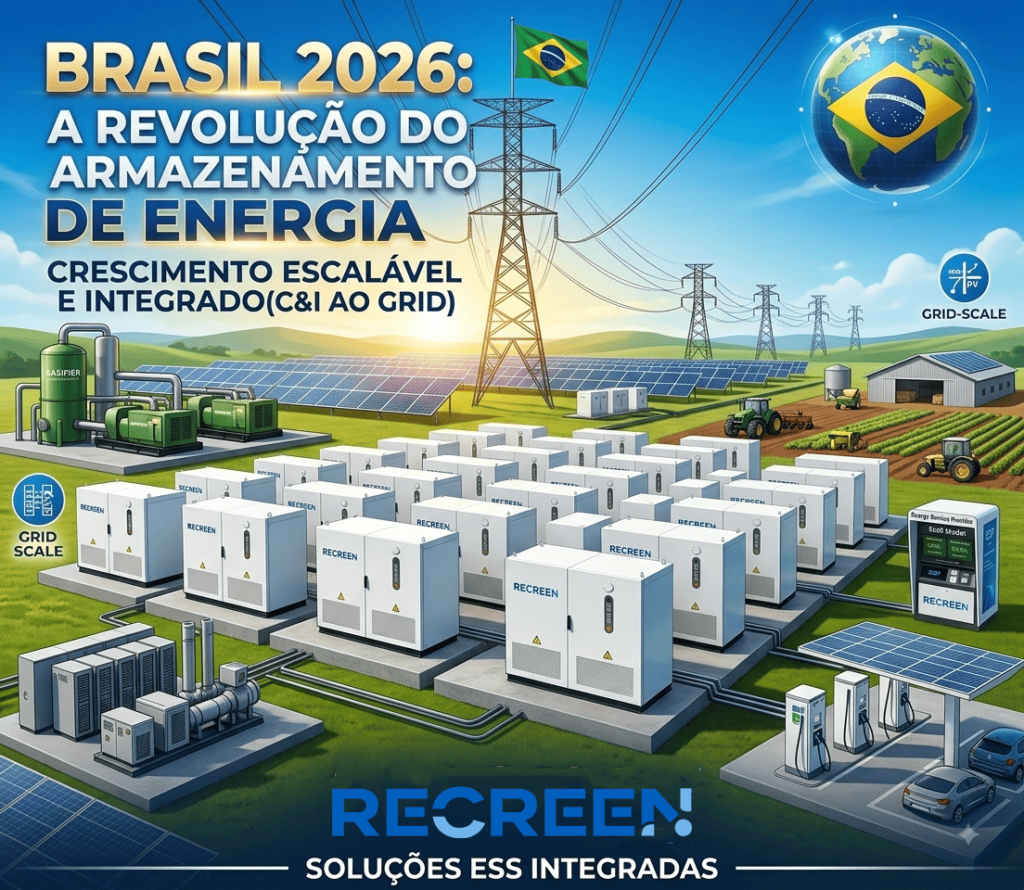
From C&I energy management to grid-scale BESS, Brazil is entering a new phase of battery energy storage development.
Brazil’s energy storage market is entering an important new phase in 2026.
For years, Brazil’s electricity system has relied heavily on hydropower, distributed solar generation, thermal generation and an increasingly liberalized electricity market. As renewable penetration increases, however, the value of flexibility, fast-response capacity and energy management is becoming more important.
Now, Battery Energy Storage Systems (BESS) are moving from pilot projects and behind-the-meter applications toward a more structured part of Brazil’s power market.
A major catalyst is the country’s first dedicated energy storage capacity auctions, known as LRCAP Armazenamento 2026.
The Brazilian Ministry of Mines and Energy (MME) published the formal guidelines for the 2026 storage auctions in June, while EPE and ONS subsequently released technical requirements for battery energy storage systems participating in the program.
For energy storage manufacturers, EPCs, energy traders and project developers, the message is clear:
Brazil is moving from “Is there a market for BESS?” to “How quickly can the market scale?”
1. Why Is the Brazil Energy Storage Market Growing?
Brazil has one of the world’s most interesting renewable energy markets.
The rapid development of solar PV and the increasing complexity of electricity consumption are creating new challenges for grid operators and energy users.
Battery storage can address several of these challenges simultaneously.
Key drivers include:
- Increasing solar PV penetration
- Growing electricity demand
- Grid congestion and network constraints
- Peak demand management
- Backup power requirements
- Renewable energy integration
- Industrial energy cost optimization
- EV charging infrastructure
- Growing demand for grid flexibility
Unlike conventional generation, BESS can respond rapidly to changes in electricity demand and supply.
This makes battery storage particularly relevant as Brazil’s power system becomes more flexible and decentralized.
2. Brazil’s First Dedicated Energy Storage Auctions
One of the most important developments in the Brazilian energy storage market is the introduction of the LRCAP 2026 energy storage auctions.
The MME’s June 2026 regulation established two auction frameworks for new battery energy storage systems: one focused on systems with national content and another open to battery systems more broadly. Projects participating in the auctions are expected to begin operation from August 2028.
ANEEL’s July 2026 consultation documents further outlined two planned storage auctions, with the proposed auctions scheduled for December 2 and December 4, 2026. The proposed contracts would provide revenue for 15 years, while storage systems could be called upon twice per day and would have six hours to restore their full state of charge.
This is an important transition.
Brazil is no longer treating energy storage only as an emerging technology.
It is beginning to treat BESS as an important component of power system reliability and capacity management.
3. What Does This Mean for the Brazilian BESS Market?
The opportunity is not limited to utility-scale projects.
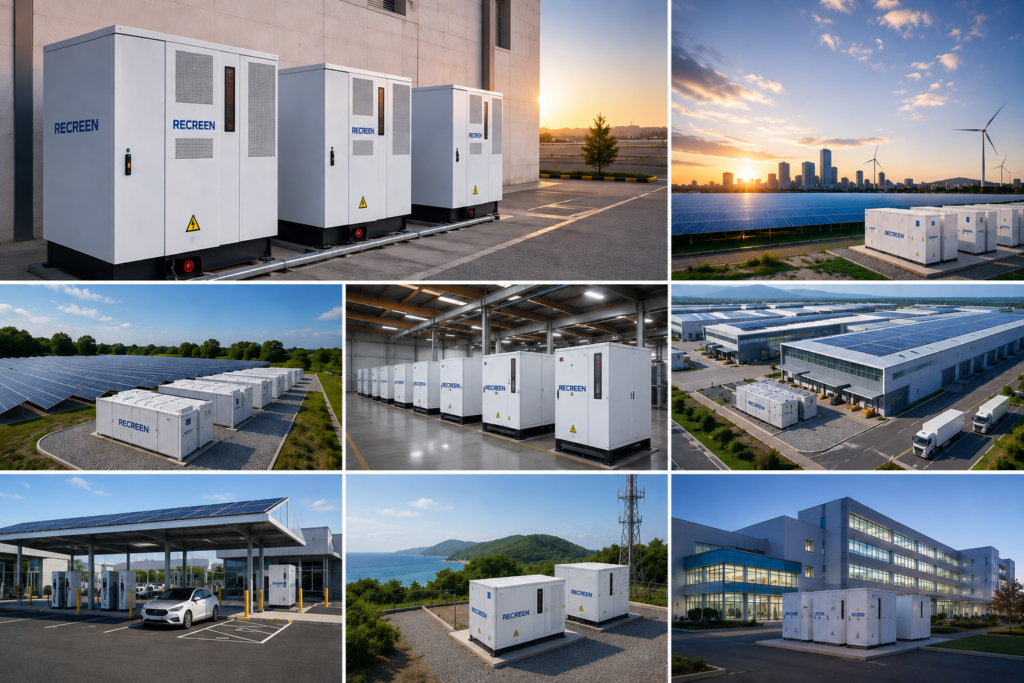
Brazil’s energy storage market can broadly be divided into several segments.
| Market Segment | Main Applications |
|---|---|
| Utility-scale BESS | Grid capacity, flexibility, renewable integration |
| C&I Energy Storage | Peak shaving, demand management, backup power |
| Solar + Storage | Renewable energy optimization |
| Microgrids | Grid resilience and energy independence |
| EV Charging + BESS | Peak-load management and grid optimization |
| Backup Power | Critical infrastructure and industrial facilities |
This creates opportunities across the entire BESS value chain—from battery manufacturers and PCS suppliers to EPCs, energy traders and Energy-as-a-Service providers.
4. C&I Energy Storage: An Important Near-Term Opportunity
While utility-scale storage is attracting significant attention, commercial and industrial energy storage systems (C&I BESS) may offer one of the most practical entry points for international suppliers.
For Brazilian businesses, energy storage is not simply about storing electricity.
It can become a tool for managing the cost and reliability of electricity.
Typical C&I applications include:
Peak Shaving
BESS discharges during periods of high electricity demand to reduce peak power consumption.
Demand Management
Businesses can use battery storage to manage demand levels and avoid unnecessary increases in contracted capacity.
Backup Power
BESS can provide fast backup power for factories, hospitals, data centers, logistics facilities and other critical loads.
Solar Energy Optimization
Excess solar generation can be stored during periods of high PV production and used later when electricity demand increases.
Microgrid Operation
Battery storage can become a key component of microgrids combining solar PV, generators, loads and energy management systems.
5. Matrix Energia: A Useful Example of Brazil’s C&I Storage Opportunity
One company worth watching is Matrix Energia, which demonstrates how BESS can be incorporated into an energy-services business model.
Matrix has expanded its energy storage activities through an Energy as a Service (EaaS) approach, allowing customers to access battery storage without necessarily purchasing and owning the complete system themselves.
Matrix and Huawei Digital Power have also expanded their collaboration. Public information indicates that the companies initially targeted 224 MWh of BESS deployments and subsequently expanded their ambition toward approximately 750 MWh by 2027.
This is important because it demonstrates a broader change in the market:
The future of energy storage may not be limited to selling batteries. It can also involve selling energy services.
6. Energy Storage as a Service: A New Business Model
Traditional energy storage projects often require customers to make a significant upfront investment.
However, the Energy as a Service (EaaS) model changes the equation.
Instead of purchasing the entire BESS system, a customer can potentially pay for the energy-management service and share the economic benefits generated by the system.
For example:
Traditional model
Customer → purchases BESS → owns and operates system
EaaS model
Energy service provider → invests in BESS → operates system → customer pays for service
This model can make energy storage more accessible to businesses that want to reduce energy costs but do not want to make a large upfront capital investment.
For BESS manufacturers, this also creates a new customer category:
Energy service companies and energy traders.
7. Where Will BESS Be Used in Brazil?
The Brazilian market presents several strong application scenarios.
Industrial Facilities
Energy-intensive industries can use BESS for:
- Peak demand management
- Backup power
- Solar integration
- Energy cost optimization
- Power quality improvement
Data Centers
For data centers, reliability can be more valuable than electricity savings alone.
Battery storage can provide rapid backup power and support the transition between grid power and longer-duration backup systems.
Hospitals
Hospitals require highly reliable electricity for critical medical equipment and infrastructure.
BESS can provide rapid-response backup power and improve energy resilience.
Logistics & Cold Storage
Warehouses and refrigerated facilities can use energy storage to manage peak loads while maintaining reliable electricity supply.
EV Charging Infrastructure
High-power EV charging can create significant instantaneous demand.
Combining EV chargers + BESS + solar PV can help reduce grid impact and optimize charging infrastructure.
8. BESS vs Diesel Generator for Brazilian Businesses
Another important opportunity is the gradual evolution of backup power.
Diesel generators remain widely used for emergency backup, particularly in critical infrastructure.
However, battery storage provides several advantages:
| Feature | Diesel Generator | BESS |
|---|---|---|
| Fuel requirement | Ja | No |
| Local emissions | Ja | No |
| Noise | High | Low |
| Response | Seconds | Milliseconds |
| Maintenance | Regular engine maintenance | Lower maintenance |
| Solar integration | Limited | Excellent |
| Peak shaving | Limited | Excellent |
| Energy management | Limited | Fortgeschrittene |
This does not mean diesel generators will disappear.
Instead, one increasingly attractive configuration is:
BESS + Solar + Diesel Generator
In this architecture, the battery handles fast-response backup and daily energy optimization, while the generator provides longer-duration backup when required.
This hybrid approach can reduce generator runtime and fuel consumption while improving overall power reliability.
9. What Should International BESS Suppliers Know About Brazil?
Entering Brazil is not simply a matter of offering a competitive battery price.
Successful suppliers need to understand the entire project ecosystem.
1. Inverter & PCS Compatibility
Brazilian customers may already have preferred inverter or PCS suppliers.
A battery system should therefore support flexible system integration rather than being tied to a single inverter ecosystem.
2. Local Technical Support
C&I customers expect rapid technical support.
Local spare parts, commissioning assistance and after-sales service can become important differentiators.
3. Certification & Grid Requirements
Brazil has specific technical and regulatory requirements for electrical equipment and grid-connected energy systems.
The requirements applicable to a project should be confirmed during system design and certification planning.
4. Financing
For larger C&I projects, financing can be as important as hardware pricing.
Suppliers that can work with EPCs, energy traders, ESCOs and financial partners may have an advantage.
10. What Opportunities Does Brazil Create for Energy Storage Manufacturers?
The market is creating opportunities at multiple levels.
Battery Manufacturers
Demand for scalable LiFePO4 battery systems is expected to grow across C&I and utility-scale applications.
PCS & Inverter Companies
High-power PCS and hybrid inverter technology will become increasingly important as BESS projects scale.
EPC Companies
Engineering, procurement and commissioning capabilities will be critical for local project execution.
Energy Service Companies
EaaS can provide an alternative route to market by removing the upfront investment barrier for customers.
System Integrators
The ability to combine batteries, PCS, EMS, solar PV, generators and EV charging infrastructure will become increasingly valuable.
11. What Does This Mean for Recreen Energy?
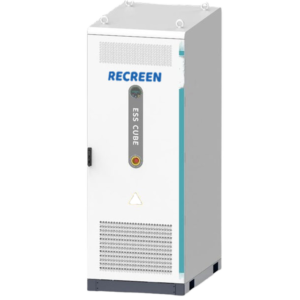
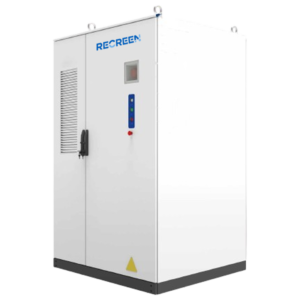
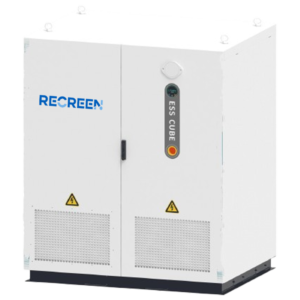
For Recreen Energy, Brazil represents an important market for modular commercial and industrial energy storage solutions.
Rather than positioning BESS simply as a battery product, Recreen can support different system architectures according to project requirements.
Our energy storage solutions can be configured for applications including:
- Commercial & industrial energy storage
- Solar + storage
- Backup power
- Peak shaving
- Microgrids
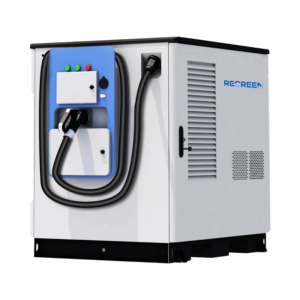
- EV charging + BESS
- Diesel + BESS hybrid systems
For projects requiring flexible system integration, battery-side solutions can also be matched with different PCS and inverter platforms according to local project requirements.
Explore Recreen Energy Storage Solutions
12. Looking Ahead: Brazil Could Become a Key BESS Market in Latin America
The most important change in Brazil is not simply the number of megawatt-hours being deployed.
It is the development of a commercial ecosystem around energy storage.
The introduction of dedicated storage capacity auctions, new regulatory treatment and growing C&I applications are creating opportunities for:
BESS manufacturers → EPCs → energy traders → ESCOs → system integrators → end users
The 2026 LRCAP process is an important milestone, but the larger opportunity extends beyond utility-scale projects.
For commercial and industrial customers, the combination of:
Solar + BESS + Energy Management + Backup Power + EV Charging
could become an increasingly important energy architecture in Brazil.
The question is no longer whether Brazil needs energy storage.
The question is how quickly the market can scale—and who will build the infrastructure behind it.
🔋 Looking for a BESS Partner for the Brazilian Market?
Recreen Energy works with EPCs, distributors, energy service companies and system integrators to develop scalable lithium battery energy storage solutions for commercial, industrial and renewable energy applications.
Whether you are developing a C&I BESS project, solar + storage system, microgrid, EV charging hub or diesel-generator replacement project, our engineering team can support battery configuration, system integration and project requirements.
Talk to our energy storage team about your Brazil project.
→ Request a BESS Solution
→ Discuss Your Project